The Weary Dunlop Commemorative Service will be held at The Shrine of Remembrance on Saturday 12th July 2025 at 2pm.

The Weary Dunlop Commemorative Service will be held at The Shrine of Remembrance on Saturday 12th July 2025 at 2pm.
On 18 June 2024, the Foundation Board was pleased to present this year’s Weary Dunlop grants in what was a very competitive field of applications. The 2024 grant recipients are:
Dr Manisha H. Shah
Research Fellow, Genetic Engineering Unit, Centre for Eye Research Australia
A Non-invasive, eye-drop based novel gene therapy to prevent blindness in neovascular eye disease age-related macular degeneration.
This project focuses on neovascular AMD, leading cause of legal blindness in aging veterans and their families worldwide. Our objective is to pioneer the development of the first-ever less-invasive, switchable gene therapy which patients can self- administer to treat AMD. We expect that this sustainable treatment approach will improve vision impairment in veterans.
Dr Sheila Patel – DIABETES GRANT
Senior Research Fellow, Department of Medicine, University of Melbourne, Austin Health
Improving the identification and treatment of left ventricular hypertrophy in patients with type 2 diabetes.
Left ventricular hypertrophy (LVH) or an enlarged heart can cause heart failure, heart attacks and death. Patients with diabetes are at very high risk of developing LVH. This project will explore whether a novel genetic marker can identify those at highest risk of LVH. This approach may allow us to offer the best treatment strategy for those at risk to prevent progression to heart failure, heart attack, and death.
Dr Mark Louis Vidallon
Research Officer, Baker Department of Cardiometabolic Health, University of Melbourne
Combating cardiovascular diseases using innovative mRNA-based therapies.
Cardiovascular diseases result in 1 in 3 deaths, affecting everyone, including our veterans. Our proposal aims to employ innovative mRNA-based agents and advanced nanobiotechnologies for earlier and better therapies. These novel therapeutics promising side-effect-free preventive, recovery, and management solutions for a spectrum of cardiovascular diseases that affect our veterans.
Dr Gink Yang
Research Fellow, Corneal Unit, Centre for Eye Research Australia
A first-line defence against corneal scarring
Our project aims to develop a first aid eye drop to prevent corneal scarring, a blinding eye disease, from trauma or infections to the front of the eye. We aim to develop the eye drop using a non-toxic protein-based formulation for the immediate treatment of injured service personnel and veterans.
Associate Professor Rachel Davey
Principal Research Fellow, Molecular Endocrinology and Musculoskeletal Research Group, Department of Medicine, University of Melbourne, Austin Health
Leveraging testosterone’s fat-reducing effects to discover novel pathways for the treatment of obesity.
Obesity affects over 60% Australians increasing the risk of diabetes and heart disease. Testosterone decreases fat but due to negative side effects cannot be used to treat obesity. We aim to discover precisely how testosterone decreases fat to assist in developing new, effective drugs that could help combat obesity.
Dr Annabelle Warren
Endocrinologist, Department of Endocrinology, Austin Health & PhD candidate, Department of Medicine, University of Melbourne, Austin Health
Solutions for low sodium: A randomised trial of Tolvaptan versus Urea for second-line therapy of hyponatraemia (TVU Trial)
Low blood sodium level (‘hyponatraemia’) is a common electrolyte abnormality that can cause confusion or seizures, with many causes – including military training exercises. This trial will compare two different treatments for hyponatraemia in hospital patients to discover the best approach and will lead to new Australian guidelines for safe treatment.
Dr Rahul Khanna – MENTAL HEALTH GRANT
Psychiatrist & Clinical Director, Transforming Trauma Victoria, Phoenix Australia, Department of Psychiatry, University of Melbourne
A digital diagnostics paradigm for posttraumatic stress disorder.
PTSD is a common and disabling condition that affects many veterans. This project combines years of practice experience in treating veterans with PTSD with advanced in artificial intelligence to improve the speed and quality of diagnoses. Ultimately, it will improve the way treatments are researched and clinically chosen.
Robert Winther
Chair, Weary Dunlop Foundation

BACK (L-R) Prof Zajac, Dr Annabelle Warren, Dr Mark Louis Vidallon, Assoc Prof Rachel Davey, Dr Rahul Kanna, Robert Winther
FRONT (L-R) Dr Manisha H Shah, Dr Gink Yang, Dr Sheila Patel
A service to Remember Prisoners of War was held at the Shrine of Remembrance in 2023 was a very meaningful event for those who were in attendance.
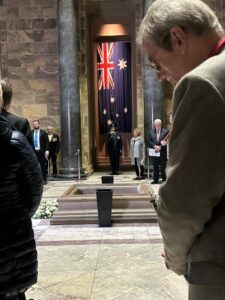
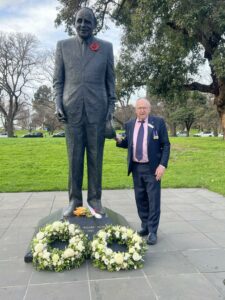
The Service was held indoors in the Sanctuary at the Shrine of Remembrance. It was a lovely setting and we are grateful and appreciative of the support of Kristen Fletcher and Dean Lee. Wreaths were transported to and laid on Weary’s Statue in St Kilda.

At the Foundation’s AGM in November, members welcomed the appointment of a new Chair and Deputy Chair.
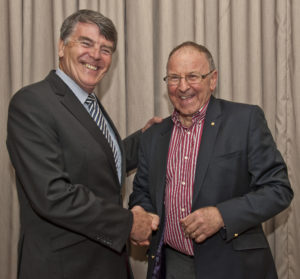 Incoming Chair is Robert Winther OAM. Robert is Veteran Liaison Officer at Austin Health and is very well known for his work with the ex-service community over some 55 years. He expressed his enthusiasm at the appointment and is looking forward to working with the Board for a cause that deeply interests him.
Robert being welcomed by Mike O’Meara
Joining Robert at the helm will be Laureen Grimes. Laureen has been a Dunlop director for two years. She is past Chair of the Victorian Veterans Council and in 2020 was inducted into the Victorian Honour Roll of Women.
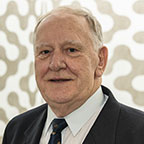 The new appointments follow the retirement from the Board of two long-serving directors, Chair Mike O’Meara OAM and Deputy Chair Michael Fidler, who together have logged some 30 years of service as Dunlop directors. They cited their reason for stepping down as providing an opportunity for renewal to carry the Foundation forward. Both affirmed their ongoing support for medical research that benefits those who have served, and their commitment to the legacy of Sir Edward Dunlop.
The Foundation is pleased to add our congratulations to Associate Professor Elif Ekinci, Board Member and Dunlop Principal Research Fellow in Metabolic Medicine at The University of Melbourne, Department of Medicine, Austin Health
Elif has been awarded the 2021 Ranji and Amara Wikramanayake Clinical Diabetes Award, recognising her work to translate research into improved outcomes for people with type 1 and type 2 diabetes. 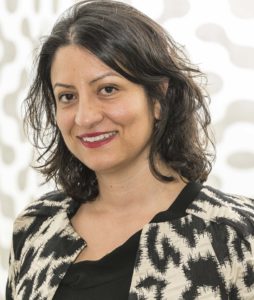 Congratulations Elif!
At the end of last year, the Foundation received the following message from the office of our Patron-in-Chief, His Excellency General the Honourable David Hurley AC DSC (Retd), Governor-General of Australia:
Of course, we welcomed this opportunity to recognise service to the Weary Dunlop legacy, and after due consideration the Foundation Board decided to award the Governor-General’s medallion to our Treasurer of five years Mr Dennis Payne.
Since joining the Board, Mr Payne, a National Serviceman, has gone well above and beyond the call of duty in attending to the financial management of the organisation. In spite of leading a busy professional life, he has been very generous with his time, and his meticulous attention to detail and keeping Directors informed is greatly appreciated. His contribution to developing new fundraising ideas is driven by a deep commitment to benefitting ex-serving men and women through medical research in the name of Sir Edward Dunlop.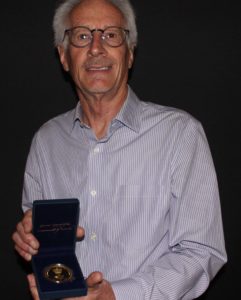
The medallion was presented at our 2021 research grant presentations in May. Congratulations Dennis, on this well-deserved acknowledgement of your contribution.
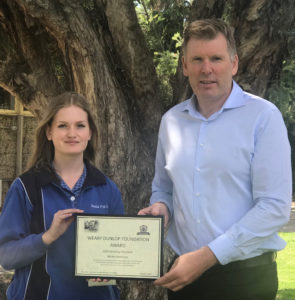 In 2020 the Foundation was pleased to initiate a $500 award to a selected Year 9 student at Benalla P-12 College.
Titled the “Weary Dunlop Foundation Award”, it recognises a student with high achievement in maths/science and aspirations of entering one of the health disciplines.
The winner requires a good understanding of Sir Edward Dunlop’s story and legacy.
We are pleased to congratulate the inaugural winner of the award, Ms Nicole Patterson, pictured here with Benalla College Executive Principal Mr Tony Clark.
We send our best wishes to Nicole in her chosen career.
The Foundation is pleased to learn that our Director and Principal Research Fellow, Associate Professor Elif Ekinci MBBS FRACP PhD, has been awarded a Dame Kate Campbell Fellowship by the Faculty of Medicine, Dentistry and Health Sciences at the University of Melbourne. The award is in recognition of Elif’s outstanding research in metabolic medicine.
In 1999 then Associate Professor Graeme Jackson was awarded a Dunlop grant for his project titled ‘Non-invasive studies of temporal lobe abnormalities in intractable partial epilepsy, using Magnetic Resonance Spectroscopy.’
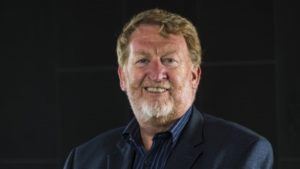
This year, now Professor Graeme Jackson has been presented with the Austin Medical Research Foundation’s Distinguished Scientist Award for his “significant contribution to research at Austin Health.”
As an internationally renowned epilepsy clinician-researcher, Prof Jackson’s work has focused on innovations in MRI technology to understand brain structure and function and applying that to the understanding of epilepsy. He has also been an enthusiastic mentor to a number of early career and post graduate researchers.
Prof Jackson acknowledged that the award was not only recognition for his work, but for the efforts of his team, colleagues and his international collaborators.
“We’ve done a lot of good work, and I think we’ve made an impact and it’s a credit to all those people.
To learn more about Prof Jackson’s work please visit epilepsyproject.org.au
The Weary Dunlop Foundation is pleased and proud to see another of our grant recipients making such a meaningful contribution in his field.
Dunlop director and World War 2 veteran Fred Cullen OAM was thrilled to meet then US Vice President Joe Biden at a ceremony at the MCG during Mr Biden’s visit to Australia in 2016.
The future President of the United States presented Fred with a restored US flag that Ivanhoe RSL, where Fred had been long term president, had held in its keeping since 1957. It was the first flag to go ashore at Guadalcanal and was presented to Ivanhoe by the 1st Marine Division. The flag had fallen into disrepair and the US Government agreed to have it restored and presented back to Ivanhoe in recognition of their concern for their national emblem.
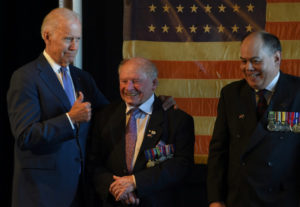
Fred took the opportunity to resent Mr Biden with a Weary Dunlop badge and a copy of the book, Weary: an Australian Hero.